Categories
Pedagogy UVA Collaboration

My Experience Leading a Workshop on Text Analysis at Washington and Lee University

[Enjoy this guest post by Sarah McEleney, doctoral candidate in the Slavic Languages and Literature Department at University Virginia. She came to W&L to give a workshop in Prof. Mackenzie Brooks’s DH 102: Data in the Humanities course through a Mellon-funded collaboration with the Scholars’ Lab at UVA. More information about this initiative can be found here. This post is cross-listed on the Scholars’ Lab blog.]

As a graduate student participating in the University of Virginia and Washington & Lee University digital humanities collaboration, during the fall 2017 I led a guest workshop on text analysis in Mackenzie Brooks’ course DH 102: Data in the Humanities. This workshop was an exploration of approaches to text analysis in the digital humanities, which concurrently introduced students to basic programming concepts. For humanities students and scholars, the question of how to begin to conduct text analysis can be tricky because platforms do exist that allow one to perform basic text analyses without any programming knowledge. However, the ability to write one’s own scripts for text analysis purposes allows for the fine-tuning and tailoring of one’s work in highly-individualized ways that goes beyond the capabilities of popular tools like Voyant. Additionally, the existence of a multitude of Python libraries allows for numerous approaches for understanding the subtleties of a given text of a corpus of them. As the possibilities and directions for text analysis that Python enables are countless, the goal of this workshop was to introduce students to basic programming concepts in Python through the completion of simple text analysis tasks.

At the start of workshop, we discussed how humanities scholars have used text analysis techniques to create some groundbreaking research, such as Matthew Jockers’ research into the language of bestselling novels, as well as the different ways that text analysis can be approached, briefly looking the online text analysis tool, Voyant.

For this workshop students downloaded Python3 and used the simple text editor that is automatically installed with it, IDLE. This way we didn’t have to spend time downloading multiple programs. While IDLE is rather barebones, its functionality as a text editor is fine for learning the basics of Python, especially if one doesn’t want to install other software. From here, by using a script provided to the students, we explored the concepts of variables, lists, functions, loops, and conditional statements, and their syntax in Python. Using these concepts, we were able to track the frequency of chosen words throughout different sections of a story read by the script.

The workshop then delved into a discussion of libraries and how work can be enhanced and made to better suit one’s needs by using specific Python libraries. As the focus of the workshop was on text analysis, the Python library that we looked at was NLTK (Natural Language Toolkit), which has a vast variety of functions that aid in natural language processing work, such as word_tokenize() and sent_tokenize(), which break up a text into individual parts, as words or sentences, respectively. The NLTK function FreqDist() simplifies the task of getting a count of all the individual words in a text, which we had done with Python alone in the prior script before working with NLTK. The inclusion of NLTK in the workshop was meant to briefly show students how important and useful libraries can be when working with Python.

While only so much can be covered over the course of a single workshop, the premise of the workshop was to show students that you can do some very interesting things with text analysis with basic Python knowledge, and to dive into Python programming headfirst while learning about general concepts fundamental to programming. As digital humanities methods for humanities research are becoming more and more common, working with Python’s capability for natural language processing is a useful tool for humanists, and in an introductory class, the goal of my workshop was to spark students’ interest and curiosity and provide a stepping stone for learning more, and at the end of the workshop, further resources for students to turn to in learning more about Python and text analysis were discussed.
Categories
DH Event on campus

Double the DH: Check Out These Events On Campus

Calling your attention to two speakers:

Laura I. Gómez on “The Problem is Not in the Code: Racism, Sexism and Inequalities in Tech”

Thursday, November 30, 2017
5pm
Stackhouse Theater

Laura I. Gómez is the founder and CEO of venture-backed startup Atipica, Inc., which is a talent discovery engine that uniquely combines both artificial and human intelligence to help companies unlock the lifetime value of their talent data. She is also a founding member of Project Include, a non-profit that uses data and advocacy to promote inclusion solutions in the tech industry. Gómez will talk about the importance of the diversity and inclusion efforts she has helped foster and why we need them to combat racism, sexism, and discrimination in the technology industry.

This event is sponsored by the Roger Mudd Center for Ethics at Washington and Lee University. It is part of the 2017-18 Equality and Difference speaker series. 


Deen Freelon on “Computational Communication Research is a Thing”

Thursday, November 30, 2017
5pm
Northen Auditorium

Deen Freelon is an associate professor in the School of Media and Journalism at the University of North Carolina. He will be giving an introduction into using computational methods to study online communication. He uses computational methods in his own work studying political expression in digital and social media, including movements like the Arab Spring and Black Lives Matter.

This event is hosted by the Washington and Lee University Journalism Department. 


Both are on Thursday, November 30, 2017 at 5pm so the choice is yours!

Categories
DH Event on campus Speaker Series

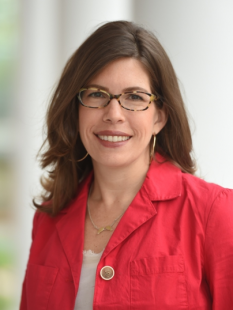
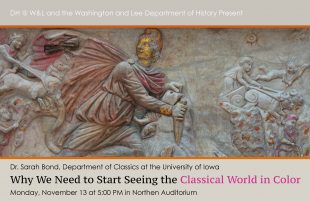
DH Speaker Series: Dr. Sarah Bond

Join us for a talk by Dr. Sarah Bond, Assistant Professor in Classics at the University of Iowa. She will be speaking on “Why We Need to Start Seeing the Classical World in Color.”

Monday, November 13, 2017
5pm
Northen Auditorium


Why We Need to Start Seeing the Classical World in Color

Sarah E. Bond
Department of Classics
University of Iowa

In an essay, Sarah Bond writes, “The equation of white marble with beauty is not an inherent truth of the universe; it’s a dangerous construct that continues to influence white supremacist ideas today.” Bond continues her exploration of color perceptions in the scope of the ancient world with a discussion of polychromy and the technology used to restore the colors of statues and other pieces of ancient Roman art. She prompts us to wonder: what is the relationship between color and our cultural values? Why is white marble considered the epitome of beauty? What influenced this perception, and how can we challenge it? How does this reflect on the status of ourselves? Bond’s talk will raise these questions about cultural values and explore what the absence of color really means.

Dr. Sarah Bond is an assistant professor in Classics at the University of Iowa. She is a digital humanist, who is also interested in late Roman history, epigraphy, late antique law, Roman topography, and the socio-legal experience of ancient marginal peoples. Bond earned her Ph.D. in History from the University of North Carolina at Chapel Hill and her B.A. in Classics and History with a minor in Classical Archaeology from the University of Virginia. During the 2011-2012 academic year, she was a Mellon Junior Faculty Fellow in Classics and History at W&L.

This event is made possible by a grant from the Andrew W. Mellon Foundation and a Dean of the College Cohort Grant. It is co-sponsored by the Washington and Lee History Department.

Categories
DH Event on campus

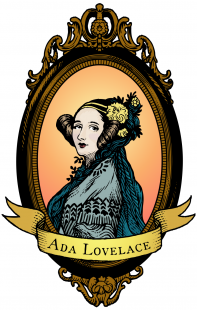
Ada Lovelace Day: A Celebration of Women in STEM

So, who was Ada Lovelace? Some people know her as the daughter of Lord Byron, the famed Romantic poet. People should know her as the first computer programmer—not as the first female computer programmer but as the first ever! She is responsible for elaborating on the “Analytical Engine,” an early predecessor of the modern computer. Her impact on the “Analytical Engine” as well as on other machines was groundbreaking and remains extremely relevant as we continue to embrace and improve upon technology. 

Today, we celebrate her as well as all women in science, technology, engineering and math around the world on Ada Lovelace Day.

On October 10th, we had our own Ada Lovelace Day at W&L! Sponsored by the University Library, we took to Wikipedia to edit any page we felt needed a little TLC. Specifically, the edit-a-thon was intended to raise awareness about underappreciated women in STEM, like Ada Lovelace, by inviting students and faculty alike to edit Wikipedia articles, create new articles for important people without them, and supply citations for stated facts without references. Emily Cook, our Research and Outreach Librarian, hosted the event and provided attendees with information on how to get started (as well as candy, hot chocolate and Pure Eats donuts). She emphasized the importance of “verifiable accuracy” as Wikipedia puts it in its stated principles and simply getting the facts out there so that innovators like Ada Lovelace can be awarded the appreciation they deserve. 

As I enjoyed a Pure Eats donut, I explored the list of women scientists and important figures and quickly became overwhelmed by the number of underrepresented and underappreciated women whose pages required improvement. I wanted to do them all justice by editing their pages and contributing to the culmination of knowledge already on the Internet. Because I couldn’t choose just one, I aided the issue at large by finding references for different statements without citations on various articles. In this way, I felt that I was able to help in a broad yet impactful way. Now that I have dipped my toe into the world of editing Wikipedia articles, I can dive deeper into individual articles in the future, verifying facts and adding biographical information in the hopes of garnering support for and granting credit to women whose achievements should not go unnoticed. 

And there are ways for you to get involved too! Although this year’s Ada Lovelace Day has passed, you too can contribute to the cause and engage in the rewarding feeling of spreading knowledge on the Internet by editing one of the 5,490,757 articles (and counting) currently on Wikipedia. There are an infinite number of ways to celebrate important women in STEM and make a difference.

Check out these links to get started:

How to Edit Wikipedia Articles

WikiProject: Women in Red

WikiProject: Women in Science

Women in History Stubs

Statements that Require Citations

-Jenny Bagger, DH Undergraduate Fellow

Categories
Undergraduate Fellows

Hi DH! I’m Jenny

Hi! My name is Jenny Bagger, and I’m a junior from Westfield, New Jersey. I am so excited to be the new Digital Humanities Strategic Communications Fellow!

I joined the W&L Digital Humanities team because I wanted to gain relevant and energizing hands-on experience along with my academic coursework. My passion for the English language as well as my desire to learn more about editing drew me to DH, specifically the Strategic Communications role. I was intrigued by DH’s initiative of fostering research at a small liberal arts school, while also collaborating as a team of researchers and coders. As the DH Strategic Communications fellow, I have the privilege of exploring the projects and writing blog posts about the many endeavors of the DH program. While I wasn’t entirely sure what I was getting myself into before I started, now a few weeks in I am confident that my work with DH is going to be so much more fun and rewarding than I ever could have imagined.

Although I am a Business Administration and English double major rather than a student of communications, I learned a lot about promoting events and writing about my experiences at my internship this summer. For eight weeks, I lived in London and worked in the marketing department of a theater, where I was responsible for researching different target markets, developing and implementing a community marketing plan for the upcoming theater season, preparing a social media report for the Board of Trustees, and executing social media communications. Once the summer was over, I knew I wanted to continue practicing what I learned about marketing, communications, and representing a larger organization on social media. DH is the perfect opportunity for me to expand on my knowledge and develop my interests, while also learning about things that are completely new to me.

I didn’t think that I would be able to have an engaging real-world experience such as this as an undergraduate student, but through Digital Humanities at W&L, I get to work and practice writing, communications, and even coding!

I’m so excited for what’s to come!

Categories
Announcement

We’re hiring a Digital Scholarship Librarian!

Yes that’s right, we’re looking for a Digital Scholarship Librarian to join DH @ WLU. As a member of a library team emphasizing digital humanities, data, and collections in the liberal arts, the Digital Scholarship Librarian will have a role in advancing digital scholarship writ large at Washington and Lee. This is a position for an individual with wide-ranging interests in digital initiatives.

Please share with anyone who might be interested!

Learn more and apply on Interfolio.

Categories
DH Event on campus Speaker Series

DH Speaker Series: Megan Hess

Join us for a talk by one of our own!

Tuesday, October 17, 2017
12:15-1:15pm
Hillel 101
Please register


Megan Hess is an Assistant Professor of Accounting at Washington and Lee University.

Hess will discuss her latest DH ethics research project exploring the relationship between social networks and ethical leadership.  We will also look at some examples of how social network concepts such as group cohesion, information diffusion, central connectors, and brokers can be used to enrich studies of literature and history.

This event is made possible by a Dean of the College Cohort Grant. 

Categories
Undergraduate Fellows

A New Blog Post from a New DH Fellow

Hi! My name is Laurel Myers and I am a junior from the cornfields of Cedarville, Ohio. Even though I am an English major, I am having a deceptively hard time writing this intro blog, which is probably due to the fact that I don’t have much experience with Digital Humanities.

I stumbled upon the field and the fellowship opportunity this summer when I was trying to find a job on campus. With a six-week gap in the middle of my summer due to attending the Virginia Program at Oxford, I needed a flexible job that I could start and come back to. Thankfully, there was a project that had been sitting on the shelves for three years that was waiting to be catalogued. Special Collections had acquired the personal library of Thomas H. Carter, a literary critic and former editor of Shenandoah who had personal correspondence with Ezra Pound. I spent the summer collecting data and creating spreadsheets about his books, journals, and connections in the literary world. I am looking forward to taking my project further throughout the academic year as a DH fellow and using the information I gathered to form a comprehensive narrative about Carter that can act as a snapshot of the literary scene during the 50s.

At the moment, I am in two classes that bring together my DH project: a 20th Century British and Irish Poetry class and a Digital Humanities class. In the poetry class, we will be investigation the correspondence between Carter and Pound and also creating a journal of our own. With the Digital Humanities class, taught by Mackenzie Brooks, I will be able to work on my coding skills and learn new ways to present my research.

As an English major who also takes as many Spanish courses as possible, I saw an enormous advantage in learning more about the Digital Humanities. Being a part of DH @ WLU, I will not only gain an invaluable skillset, but also be challenged. Expanding my limited knowledge of coding while also designing platforms to showcase my project is an exciting application of what I have learned during my college career at W&L so far.


Categories
DH Project Update Trip Report Undergraduate Fellows

ILiADS 2017

As an incoming freshman last year, I never imagined I would have the opportunity to work as a research assistant by my second semester at W&L. During orientation week, I met Dr. Stephanie Sandberg and learned about her play, Stories In Blue, which tells the stories of six sex trafficking survivors in Michigan. Through the Digital Humanities Initiative, I was given an opportunity to work with Dr. Sandberg on the adaptation of her play into a website that is a resource for people to learn more about the intricacies of domestic sex trafficking as well as how they can help bring it to an end.

In the first week of August, I traveled with Dr. Sandberg, Associate University Librarian Jeff Barry, Digital Humanities Fellow Sydney Bufkin and Digital Humanities Librarian Mackenzie Brooks to the Institute for Liberal Arts Digital Scholarship (ILiADS) conference at the College of Wooster. As it says on their website, “ILiADS is a project-based and team-based opportunity for focused support of a digital project.” Making this conference unique, is the liaison model where each team is assigned an expert liaison who assists on different digital aspects of the project. Monday through Thursday were devoted to working as a team on our project, where we brainstormed what we wanted the structure of the website to be and then began building it as well as generating content. As a student with limited digital literacy skills, ILiADS provided me with an opportunity to not only take the research I have been collecting and turn it into synthesized articles, but to also learn more about what it takes to build a useable and informational website.

ILiADS is a great opportunity for students and faculty from different universities to come together for a week, work on digital humanities projects and compare what each of their institutions are doing to promote digital scholarship as technology becomes a necessity in higher learning. To be able to have this experience as a student was amazing for me because I not only got to see how important digital humanities is to our project at W&L, but how it is being used at other universities. Digital humanities is allowing the research done by students and faculty, that may otherwise get lost to the ages, to live on through easily accessible platforms.

Coming out of ILiADS, I will continue to work on research, but will also be writing more content for the website and entering my research into our hidden database structure that will make finding information easier.

Categories
Announcement Event on campus Speaker Series UVA Collaboration

Day of DH @ Fall Academy 2017

While it’s still a little scary to admit that school will be starting in a month, we’re excited about this year’s Day of DH! Join us for a morning of pedagogy and digital scholarship discussion from some of your favorite faculty members. We’re thrilled to have Amanda Visconti (Managing Director of Scholars’ Lab) joining us for the lunch time talk. And don’t forget, there’s the third annual Library/ITS mixer in the afternoon.

Sign up for these sessions and check out all the great offerings in Fall Academy event manager.

9:00-10:00am Breakfast and Mellon and You: Graduate Student Teaching Fellows
Interested in the latest updates on the Digital Humanities grant from Mellon, including pedagogical and research opportunities? Paul Youngman (Professor of German and Chair of the Digital Humanities Committee) explains! Curious about the Graduate Student Teaching Fellows and how you could leverage a UVA graduate student in your class? Hear from Caleb Dance (Assistant Professor of Classics), Suzanne Keen (Dean of the College, Professor of English), and Taylor Walle (Assistant Professor of English) on their experiences with teaching fellows, what worked, what didn’t, and what students and faculty learned.
10:15-11:45am Incentive Grant Winners: WRIT 100
Last year’s Mellon DH incentive grant winners focused on multi-modal composition in their WRIT 100 courses. This group faced unique challenges and opportunities in working with first-year students in a variety of topics. Hear about their experiences, with time to discuss ideas further. Speakers: Sydney Bufkin (Mellon Digital Humanities Fellow, Visiting Assistant Professor of English, Topic: Romantic Comedy), Genelle Gertz (Professor of English, Topic: Faith & Doubt), Sascha Golubuff (Professor of Anthropology, Topic: Terror & Violence), Wan-Chuan Kao (Assistant Professor of English, Topic: The Good Wife), and Kary Smout (Associate Professor of English, Topic: Whole New World).
12:00-1:30pm Digital Humanities Guest Speaker Amanda Visconti: Community Design Takes Time
Amanda Visconti avatar
As we experiment with virtual ways of connecting digital humanities practitioners, what kind of human effort must we invest? I’ll share two recent projects I’ve worked on to explore the (sometimes hidden) work of designing DH communities and supporting the very real humans who make up these groups. Infinite Ulysses is a participatory digital edition of James Joyce’s novel Ulysses. A variety of scholarly methods—design, coding, usertesting, blogging, and social science analysis—combined to try out a virtual space for conversations among readers from within and without the academy. The Digital Humanities Slack is an online forum for chatting about all aspects of DH. Over 1,500 people interested in DH from around the world are members, and anyone can join, regardless of experience or affiliation. I’ll use these projects to discuss what has and hasn’t worked for me in audience-nurturing DH projects, and how those experiences are shaping my part in the trajectory of the Scholars’ Lab.
4-5:30pm ITS and Library Mixer for Faculty and Staff
Attend the ITS & library reception for a fun and informative kick-off to the academic year. Meet the librarians and ITS staff and learn about our many resources and services. A wide variety of refreshments will be served. Eat, drink, and be merry with us! Hors d’oeuvres and tea will begin at 4:00. Beer and wine will be served from 4:30-5:30. This event will take place on the main level of Leyburn Library.